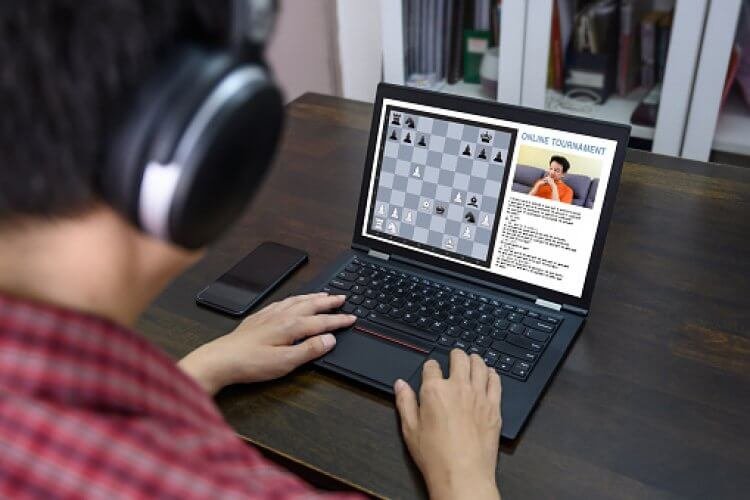
Many chess players practice every day and still see little to no improvement. This leads to frustration and confusion. The problem is rarely a lack of time or effort. Most daily routines fail because they are unstructured, repetitive, or focused on the wrong activities. Playing random games, solving endless puzzles, or watching videos without direction feels productive, but it does not guarantee progress.
A daily routine should not just keep you busy; it should push your thinking forward. Many players confuse activity with improvement. They spend hours on chess but repeat the same habits every day. Real improvement requires deliberate practice, where each session has a purpose and targets a specific weakness.
Improvement in chess comes from consistency, not long sessions. A focused 45-minute daily routine is far more effective than irregular multi-hour sessions. The brain absorbs and retains information better when practice is frequent and manageable. A routine that fits into daily life is far more sustainable and delivers better long-term results.
One of the biggest mistakes players make is starting their session by immediately playing games. Improvement accelerates when players begin by reviewing past games. Looking at recent mistakes, missed ideas, or poor decisions prepares the mind to avoid repeating them. Review creates awareness, and awareness is the foundation of progress.
Tactics are an essential part of any daily routine, but they must be used correctly. Solving puzzles mindlessly or rushing for streaks does little to improve real-game performance. Tactics should be solved slowly, with full calculation and verification. The goal is not speed, but accuracy and understanding. This builds habits that carry over into actual games.
Endgames are often ignored in daily routines, yet they play a crucial role in consistent improvement. Studying endgames improves calculation, patience, and conversion skills. Even basic endgame knowledge dramatically increases confidence in simplified positions. Including endgames regularly strengthens the foundation of a player’s chess understanding.
Many players jump from openings straight to tactics, skipping middlegame study entirely. This creates a gap in understanding. Middlegames teach planning, piece coordination, and strategic decision-making. A strong daily routine includes time to study typical structures, plans, and common positional ideas that occur in real games.
Openings should support the routine, not dominate it. Learning a small number of openings deeply is far more effective than memorizing many lines. Daily opening work should focus on ideas, plans, and typical positions rather than move-by-move theory. This keeps opening the study practically and relevantly.
Playing games is important, but too many games without analysis slow improvement. Each game should serve a purpose. Playing fewer games and analyzing them properly leads to faster growth. Quality always beats quantity when it comes to daily chess practice.
Game analysis is where real learning happens. Reviewing games helps players identify recurring mistakes, poor evaluations, and weak decision-making. Without analysis, players guess why they lost. With analysis, patterns become clear and correctable. This is one of the most effective ways to break through plateaus.
A daily routine should evolve over time. What works at one rating level may stop working later. Strong players regularly adjust their training focus based on new weaknesses. Flexibility ensures that the routine continues to challenge the player instead of becoming a comfort zone.
Motivation fades, but habits remain. A routine that depends on motivation will eventually fail. A routine built around simple, repeatable habits survives busy days, low-energy days, and setbacks. This is why structure matters more than inspiration.
A clear daily routine reduces decision fatigue. Players know exactly what to do when they sit down to train. This removes hesitation and builds confidence. Over time, discipline in training transfers directly to discipline over the board.
For children, daily routines should be short, focused, and guided. Long, exhausting sessions often do more harm than good. A well-balanced routine builds confidence, enjoyment, and steady improvement without burnout. Consistency and clarity are especially important for young learners.
A daily chess routine delivers results only when it is structured, balanced, and intentional. Improvement comes from consistent review, thoughtful practice, and honest self-assessment. Chess rewards those who train smart, not just those who train hard.
If you want help building a personalized daily chess routine that fits your schedule and accelerates improvement, you can book a free demo chess class and see how structured training creates real, measurable progress.
— Kunal Gupta
 Previous ArticleWhy Your Chess Rating Stalls and How to Break the Plateau Next ArticleThe Psychology Behind Chess Blunders: Why Strong Players Still Miss Simple Moves
chessbrainz
Feb 16,2026
 0
0
 31
31
chessbrainz
Feb 12,2026
0
21

chessbrainz
Feb 09,2026
0
56
chessbrainz
Feb 05,2026
0
101
031
021
056
0101
031
021
056
0101
.png)