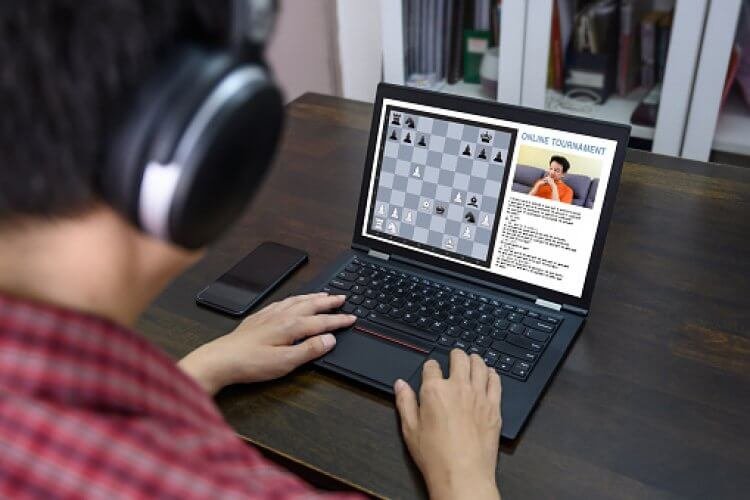
Almost every chess player experiences a period where their rating simply refuses to move. Wins and losses cancel each other out, confidence drops, and training feels pointless. This phase is frustrating because effort remains high, yet results do not follow. Many players mistakenly believe they have reached their natural limit, but in reality, rating plateaus are not permanent; they are signals.
A stalled rating does not mean you are getting worse. In fact, it often means you have outgrown your current training methods. Early improvement in chess comes quickly because basic mistakes disappear fast. Later progress requires deeper changes in thinking, decision-making, and understanding. When those changes do not happen, the rating stabilizes.
One of the most common reasons ratings stall is repetitive training. Many players solve the same type of tactics, play the same openings, and make the same mistakes every game. Familiar routines feel productive, but without increasing difficulty or addressing weaknesses, improvement stops. Chess rewards adaptation, not comfort.
Some players focus almost entirely on tactics, others only on openings, and some play endless games without analysis. Chess improvement requires balance. A player strong in one phase but weak in others will eventually hit a ceiling. Rating growth slows when training becomes one-dimensional.
Playing more games feels like hard work, but without reflection, it often reinforces bad habits. Players repeat the same errors under time pressure and never correct them. Improvement comes from understanding why games were lost or won, not simply from playing volume.
At higher levels, games are not lost by obvious blunders alone. They are lost through small positional mistakes, poor plan choices, and inaccurate evaluations. Players stuck at a plateau often calculate well but choose the wrong ideas. This is a thinking problem, not a tactics problem.
Many plateaus are revealed in endgames. Players reach equal or winning endgames but fail to convert. This creates a cycle of frustration where “won games” turn into draws or losses. Endgame weakness quietly limits rating growth even when other areas improve.
Memorizing openings, tactics, or patterns without understanding creates shallow knowledge. When positions change, memorized ideas fail. Players then panic or improvise poorly. True improvement comes from understanding ideas, not remembering moves.
When ratings stall, confidence often suffers. Players start doubting their instincts, overthinking simple positions, or playing too passively. This emotional response worsens results and reinforces the plateau. Learning how to trust sound decisions again is part of breaking through.
Stronger players break plateaus by changing how they train, not by training more. They analyze losses honestly, focus on weaknesses rather than strengths, and slow down their thinking process. Improvement resumes when training targets the right problems.
Analyzing your own games is one of the most effective plateau-breaking tools. It reveals recurring mistakes, poor plans, and missed opportunities. Without analysis, players guess what went wrong. With analysis, patterns become clear and correctable.
Interestingly, plateaus often appear after significant improvement. This happens because old habits stop working against stronger opponents. The game demands a new level of precision. Plateaus mark the transition from one skill level to the next.
Breaking a plateau requires structured change. Players must rebalance training, improve weaker phases of the game, study endgames and planning, and review games deeply. Small adjustments made consistently produce big long-term gains.
Many players struggle to identify their own weaknesses. External guidance accelerates improvement by highlighting blind spots. Feedback helps players focus energy where it matters most instead of guessing what to study next.
A stalled chess rating is not failure it is feedback. It means your current approach has reached its limit. Growth resumes when training becomes smarter, deeper, and more intentional. Chess improvement is not linear, but every plateau can be broken with the right mindset and structure.
If you want help identifying exactly why your rating is stuck and how to move past it, you can book a free demo chess class and experience how focused, structured training leads to real improvement.
— Kunal Gupta
 Previous ArticleDo Tactics Trainers Actually Boost Your Chess Rating? What the Evidence Shows Next ArticleHow to Build a Daily Chess Routine That Actually Delivers Results
chessbrainz
Feb 16,2026
 0
0
 34
34
chessbrainz
Feb 12,2026
0
21

chessbrainz
Feb 09,2026
0
56
chessbrainz
Feb 05,2026
0
101
034
021
056
0101
034
021
056
0101
.png)