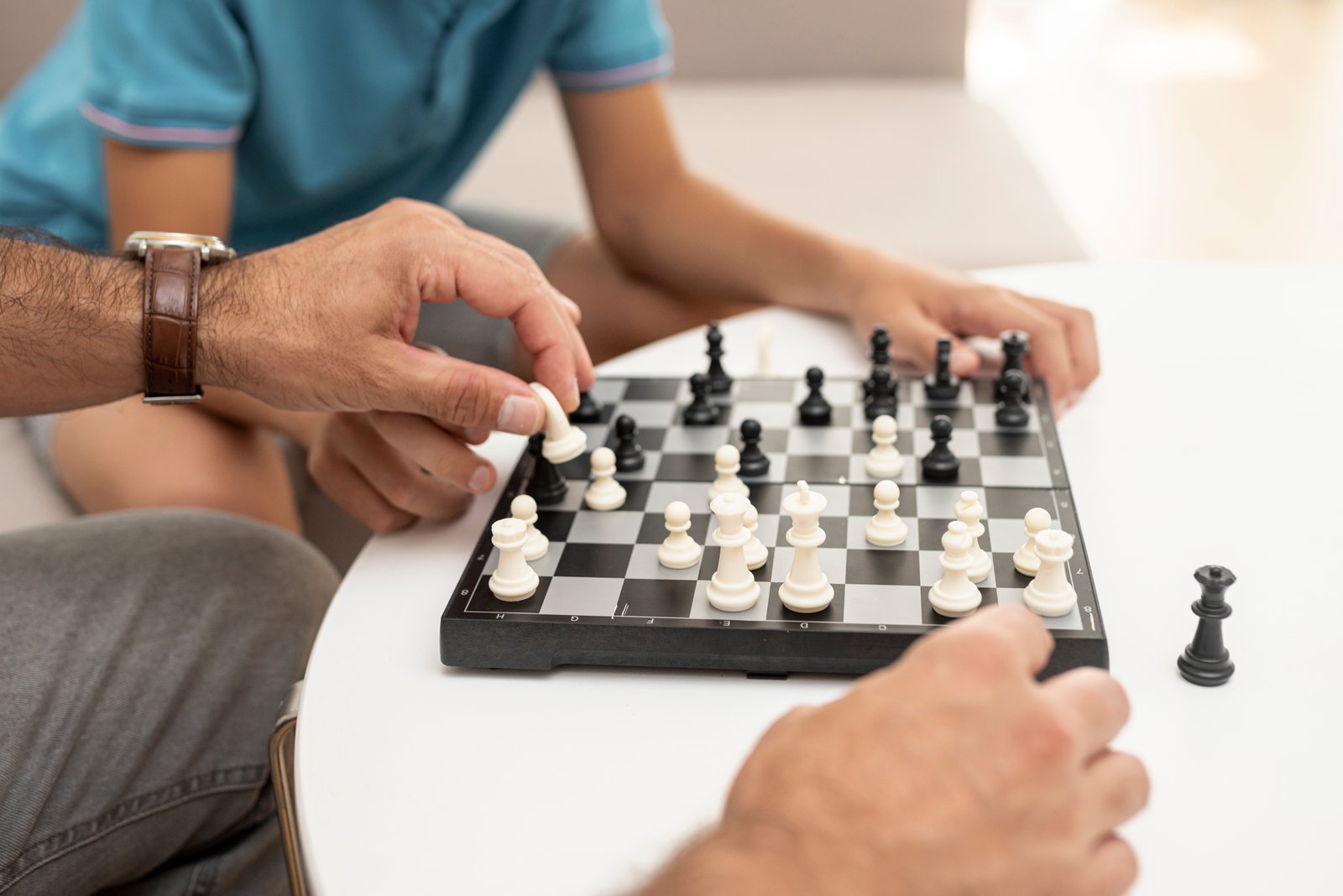
Every beginner in chess makes one common mistake, and that is forgetting about their pawns. From the outside, pawns might look insignificant compared to other pieces and only useful when they reach the last rank. But they’re actually the backbone of your position. The right pawn structure in chess is your ultimate advantage against your opponent.
Think of your pawns as the building blocks for a strong fortress or a strategic attack. You could be losing your game simply because of misplaced or neglected pawns. When you neglect them, you allow your opponent to gain the initiative, launch dangerous attacks, and restrict your own powerful pieces. A solid pawn center helps you dictate the flow of the game, while weak pawns are permanent targets.
This blog dives into what a pawn structure is, its importance, and basic pawn structures every beginner should learn.
Unlike the queen and other pieces on the board, pawns have the least mobility. Still, you can make the most out of these pawns if you follow a few simple principles. A pawn structure in chess is nothing but the arrangement of pawns on the board. This arrangement shapes your entire game, determining which squares are strong or weak. By strategically moving your pawns, you pave the path for your other strong pieces to move.
You can think of pawn structure as the invisible strategy in your game. You get to decide where to launch your attacks, which files to open up, and where your pieces will be the safest. When you master these spots, you can easily spot long-term positional advantages and avoid any blunders.
It may not look like much, but a strong pawn structure in chess can help you turn the tables. When you make the most out of these chess pieces, you get to have a more strategic and advantageous position on the board.
Here’s why the right pawn structure is all you need:
The Central Control: You’re already a step ahead if you’ve control of the center in chess. It lets you place your knights and bishops on the right squares, ready to jump into action.
Restricts Opponent Movements: You’re basically putting your opponent at a disadvantage when you use the pawns in a structured manner. It restricts their moves and gives you a significant advantage.
Protect Your Pieces: You’re making a strong fort when you have a solid pawn foundation. They offer essential support, especially to your king and more valuable pieces.
Now that you know that the pawns could give you the advantage you never had, what’s left is learning about their structures. When you opt for online chess classes, you can learn the basic pawn structures easily and gain your advantage on the board.
Here are some basic pawn structures:
Isolated Pawn: When a pawn is at risk of being isolated, it means it lacks friendly pawns to defend it. This makes it a permanent weakness, often targeted by the opponent.
Doubled Pawns: When two pawns of the same color are on the same file, then they are called doubled pawns. These pawns lead to a poor pawn structure in chess.
Backward Pawn: It’s when your pawn is behind all of its neighboring pawns and cannot be defended by them. This pawn becomes a liability because it's difficult to advance and is easy prey.
Passed Pawn: You get a significant advantage in the game if you manage to have a passed pawn. This pawn cannot be stopped by the rival pawns on its way to being promoted.
Hanging Pawns: When two connected pawns of the same color have no other pawns defending them, they’re called hanging pawns. It’s better to let them stay in the same rank.
Pawn Majority in the Center: The side having more pawns than the opponent in the central files generally gains better central control. This is a huge positional edge that helps steer the game in your favor.
Pawn Majority in the Flank: It’s when you have more pawns than your opponent on one of the flanks of the board. You can use this to create a passed pawn or launch an attack.
Pawn Minority in the Flank: When you have fewer pawns than your opponent on one flank, it is called a pawn minority. You can use it to create a weakness in the opponent’s pawn structure.
Simply learning about the pawn structures won’t do you any good. You’ve to understand how you can use the right structure to your advantage and make your way to victory. The most effective way to grow your pawn structure knowledge is to opt for online chess classes.
When you opt for professional instruction, you gain deep insights into practical and strategic applications. You ensure that you’re transforming your theoretical knowledge into real-world wins. A coach like Chessbrainz can help you analyze games and give you the confidence to apply them directly in your matches.
Chessbrainz, a dedicated partner, stands out because we focus on personalized learning that helps you understand the science behind every move. Be it openings, end games, or your pawn structure, our online chess classes cover everything
Here’s what makes us the preferred choice:
Weekly Tournaments: Our weekly tournaments give you the perfect opportunity to test your knowledge, including those tricky pawn structures.
Personalized Interactive Platform: You get to have a personalized and interactive platform where learning feels like a fun game, not a chore.
AI Analysis & Reports: Improving your game becomes a breeze with our AI analysis and reports that pinpoint exactly where your pawn structures need work.
FIDE Rated Coaches: You can rest assured as our FIDE-rated coaches guide you in mastering the intricacies of pawn structures.
When you choose Chessbrainz, you’re choosing a guide that supports you every step of the way.
Pawn structures are the secret language of chess. They might seem simple, but mastering their dynamics is what separates a good player from a great one. Understanding these basic structures will immediately elevate your game.
Ready to level up your game? Chessbrainz has got your back. We offer personalized online chess classes, helping you understand the strategy behind every pawn push and every position. Stop letting your pawns be liabilities and start turning them into powerful assets with expert guidance. Contact us today and take the first step toward true chess mastery.
What is the most common mistake beginners make with pawns?
The most common mistake beginners make is leaving their pawns undefended, which can lead to a poor pawn structure.
How does a strong pawn structure help in controlling the center?
A strong pawn structure allows a player to control key central squares, either directly or by supporting pieces that occupy those squares.
How can Chessbrainz help with mastering pawn structures?
We offer personalized online chess classes to help you understand the long-term strategic implications of various pawn formations through expert instruction.
 Previous ArticleBenefits of Remote Chess Classes Over Traditional Coaching Next ArticlePositional vs Dynamic Chess: Understanding the Key Differences in Strategy
chessbrainz
Mar 09,2026
 0
0
 25
25

chessbrainz
Mar 09,2026
0
36
chessbrainz
Mar 09,2026
0
124

chessbrainz
Mar 06,2026
0
39
025
036
0124
039 11175
11175 01081
01081 0907
0907 0933
0933
chessbrainz
Mar 09,2026
0
25
chessbrainz
Mar 09,2026
0
36
chessbrainz
Mar 09,2026
0
124
chessbrainz
Jan 16,2026
0
239

.png)