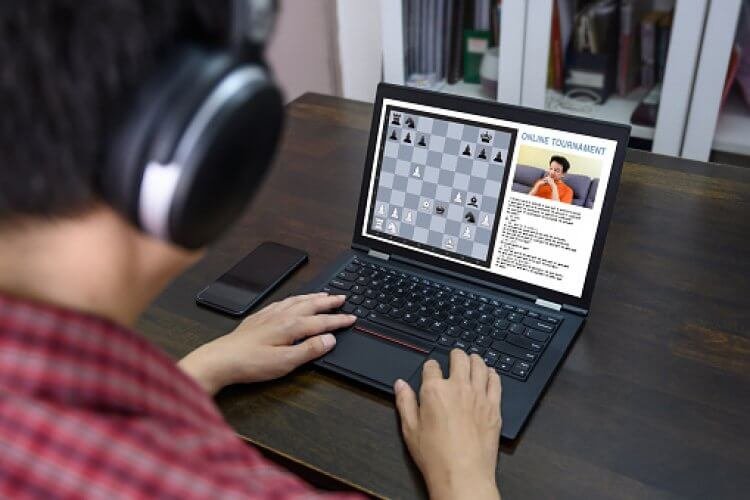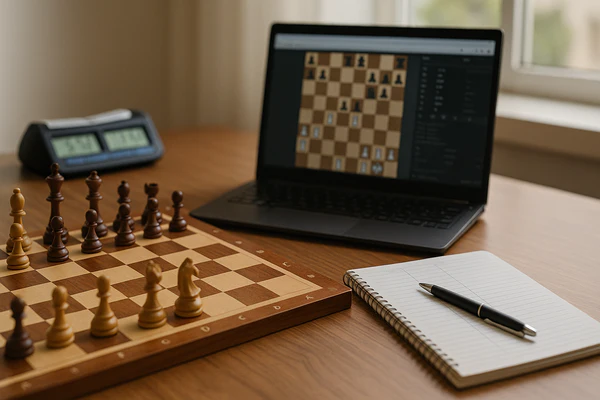
Many chess players play regularly and train hard, yet struggle to improve because they skip one crucial step: proper game analysis. Playing games shows you what happened, but analysis explains why it happened. Without understanding your own decisions, mistakes repeat silently. This is why game analysis is one of the most important yet underused tools in chess improvement.
When players try to analyze their own games, they often feel lost. They jump straight to an engine, see evaluation swings, and feel overwhelmed by suggested moves they don’t understand. Without guidance, analysis turns into passive watching rather than active learning. This creates the illusion of study without real insight.
The goal of self-analysis is not to find the “best move” on every turn. It is to understand thinking errors, poor plans, missed opportunities, and incorrect evaluations. Effective analysis focuses on decision-making rather than perfection. Understanding why a move was chosen matters more than knowing it was wrong.
Many players analyze emotionally, trying to justify their moves or rushing past uncomfortable positions. Others rely completely on engines, copying lines without comprehension. Both approaches limit improvement. Analysis should be honest, slow, and focused on understanding, not ego protection.
A professional coach brings structure and clarity to analysis. Instead of looking at everything, a coach helps identify key moments that decided the game. This saves time and prevents overload. More importantly, a coach explains ideas in a way that matches the player’s level, turning confusion into clarity.
Not every mistake matters equally. Coaches focus on critical moments where the evaluation truly changed, such as wrong plans, poor exchanges, or missed transitions. By isolating these moments, analysis becomes efficient and impactful. Players learn where their thinking broke down, not just which move was inaccurate.
A coach looks beyond the move itself and examines the thought process behind it. Was the plan unclear? Was the opponent’s threat ignored? Was time pressure influencing decisions? Fixing thinking errors leads to long-term improvement, while fixing isolated moves does not.
Engines are powerful tools, but using them too early prevents learning. Coaches encourage players to analyze first without assistance, forming their own conclusions. Only afterward is the engine used to confirm or challenge ideas. This approach trains independent thinking rather than dependence on technology.
With repeated guided analysis, players begin to recognize recurring mistakes and familiar patterns. Over time, these patterns become easier to spot during games. This is how analysis translates into better performance over the board. Awareness precedes correction.
Analyzing losses alone can be emotionally draining. A coach provides objectivity and reassurance, helping players see mistakes as learning opportunities rather than failures. This emotional balance is crucial for long-term motivation and confidence.
Many players spend hours analyzing games inefficiently. A coach streamlines the process, focusing on what truly matters. This saves time while producing better results. Quality analysis beats quantity every time.
The real power of guided analysis is how it feeds future training. Coaches turn analysis insights into targeted practice, whether it’s endgames, planning, or calculation. This creates a feedback loop where every game directly improves future performance.
Young players often lack the experience to evaluate positions accurately. Coach-guided analysis helps them build correct habits early, preventing the formation of bad patterns. This structured approach accelerates development and builds confidence.
The goal of working with a coach is not dependence, but independence. Over time, players learn how to ask the right questions, identify key moments, and analyze effectively on their own. Good coaching builds self-sufficiency.
analyzing your own games is one of the fastest ways to improve, but only when done correctly. A professional coach transforms analysis from a confusing task into a powerful learning tool. By focusing on thinking, structure, and clarity, guided analysis turns every game into a step forward.
If you want to learn how to analyze your games properly and turn mistakes into measurable improvement, you can book a free demo chess class and experience how professional guidance accelerates progress.
— Kunal Gupta
 Previous ArticleTop 10 Chess Books Every Chess Player Should Read Next ArticleThe Truth About Chess Study Burnout and How to Prevent It
chessbrainz
Mar 09,2026
 0
0
 23
23

chessbrainz
Mar 09,2026
0
40
chessbrainz
Mar 09,2026
0
25

chessbrainz
Mar 06,2026
0
86
023
040
025
086
023
025
086 00
00
.png)