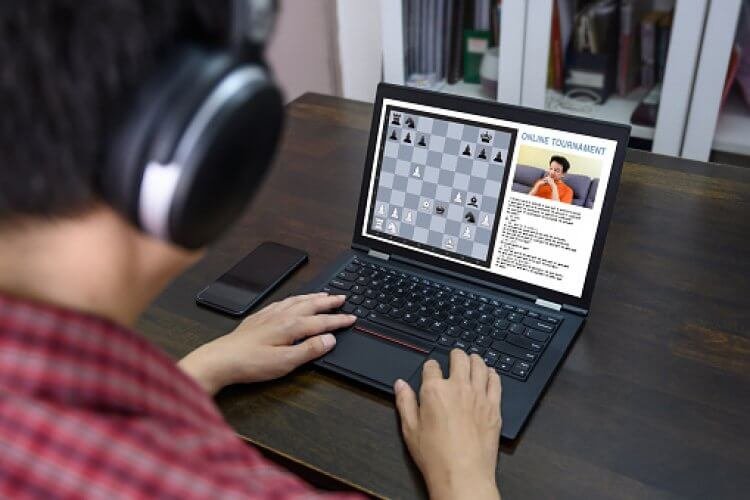
Tactics trainers have become one of the most widely used tools in modern chess improvement. Almost every major chess platform highlights daily puzzles, streaks, ratings, and competitive leaderboards. For many players, solving tactics feels productive because it is fast, measurable, and rewarding. The immediate feedback gives a sense of progress, and this makes tactics trainers especially appealing to players who want quick results.
Most players believe that solving more tactics will automatically increase their chess rating. The reasoning seems logical: many games are decided by tactics, so improving tactical skill should lead to more wins. As a result, players often dedicate the majority of their study time to puzzles, sometimes ignoring other critical areas of chess development.
There is no doubt that tactics trainers improve certain skills very effectively. They strengthen pattern recognition, sharpen calculation, and increase awareness of common tactical themes such as forks, pins, skewers, and mating nets. At beginner and lower-intermediate levels, this alone can dramatically reduce blunders and help players capitalize on opponent mistakes.
Yes, ratings often improve in the early stages of consistent tactical training. Many players see a noticeable increase in performance because opponents at these levels frequently miss basic threats. Being tactically alert is often enough to win games quickly, and this reinforces the belief that tactics training is the key to improvement.
After an initial boost, many players experience a frustrating plateau. Their puzzle rating continues to rise, but their actual chess rating stops improving. This happens because tactics trainers isolate positions where a tactic definitely exists. Real games are different. Tactical opportunities must be created through good positional play, not simply spotted on demand.
Tactics puzzles come with an invisible hint: there is always a winning move. In real games, you never know whether a tactic is present or not. This difference causes many players to force combinations that are not sound, leading to unnecessary sacrifices and blunders. Puzzle-solving habits do not always translate directly into good decision-making over the board.
Tactics trainers do not teach players how to build an advantage gradually, how to improve a bad position, or how to handle quiet middlegames. They also do not develop endgame technique or strategic planning. These missing skills are often the reason players struggle to convert winning positions or hold worse ones despite strong tactical ability.
Stronger players still solve tactics, but they do not rely on them as their main training method. For them, tactics are a tool to stay sharp, not the foundation of their chess understanding. Their primary focus remains on positional understanding, game analysis, and endgame technique, which naturally create tactical opportunities during play.
Many players solve puzzles by recognizing patterns and guessing moves instead of calculating deeply. While this may work in puzzles, it creates bad habits in real games. Effective tactical training requires slow, disciplined calculation and full verification of variations. Without this discipline, players develop false confidence that collapses under tournament pressure.
Most tactics trainers focus on middlegame combinations and mating attacks. Endgames, however, demand precision, planning, and technical accuracy. Players who rely only on tactics often struggle in simplified positions, even when they are ahead in material. This leads to drawn or lost games that should have been won.
Coaching experience consistently shows that players who combine tactics with endgame study, positional understanding, and game analysis improve more reliably. Tactics increase sharpness, but understanding ensures consistency. Players who train in a balanced way avoid plateaus and continue to progress steadily.
Tactics trainers are most effective when used in moderation and with intention. Solving puzzles slowly, reviewing mistakes, and connecting tactical ideas to real games makes training meaningful. When tactics are treated as part of a complete training system, they become a powerful asset rather than a distraction.
Children respond well to tactics because they are visual, concrete, and engaging. Tactics build confidence and calculation skills quickly. However, without guidance, young players may struggle later when games become more strategic and less tactical. This is why balanced training is especially important for long-term development.
Lasting improvement comes from combining tactical training with positional understanding, endgame technique, and regular game analysis. Each area supports the others. Tactics sharpen the mind, but understanding directs it. This balance is what separates temporary improvement from lasting progress.
Tactics trainers do boost chess ratings, especially in the early stages. However, they are not a complete solution. Players who rely only on tactics often plateau, while those who integrate tactics into a broader training plan continue to improve. Tactics are powerful tools, but they must be used wisely.
Tactics trainers are essential, but they are not magic. They sharpen calculation, but they do not replace understanding. Real chess improvement comes from learning how and when to apply tactics within a complete understanding of the game.
If you want a structured plan that shows how to use tactics effectively alongside other key skills, you can book a free demo chess class and experience how balanced training leads to real, lasting rating improvement.
— Kunal Gupta
 Previous ArticleChess Etiquette for Kids: How to Behave Like a True Player Next ArticleWhy Your Chess Rating Stalls and How to Break the Plateau
chessbrainz
Feb 16,2026
 0
0
 35
35
chessbrainz
Feb 12,2026
0
21
chessbrainz
Feb 09,2026
0
56
chessbrainz
Feb 05,2026
0
102
035
021
056
0102
035
021
056
0102
.png)