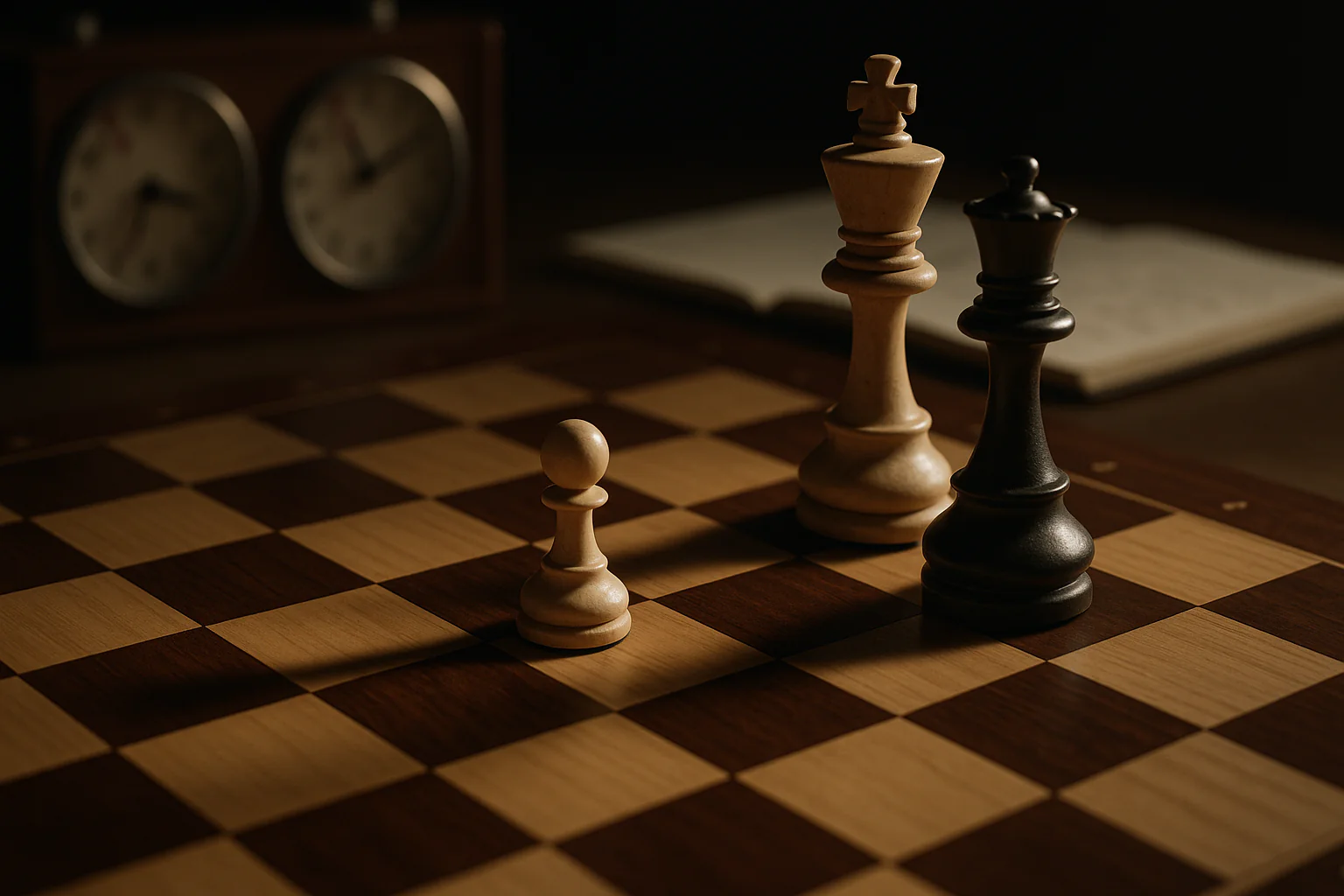
Many players search for shortcuts to chess mastery. Some obsess over openings, others grind tactics endlessly, while a few dive deep into endgame theory. The reality is far less dramatic and far more demanding. Chess mastery comes from balance. Strong players do not treat openings, middlegames, and endgames as separate subjects. They see them as one continuous story.
Every game begins in the opening, transforms in the middlegame, and resolves in the endgame. Weakness in any one phase leaks into the others. A good opening means nothing if you mishandle the middlegame. A strong middlegame advantage is wasted if you cannot convert the endgame. Mastery is built by understanding how these phases support each other.
At the highest level, openings are not about surprise or memorization. They are about reaching playable positions with clarity and confidence. Strong players use openings to establish healthy pawn structures, active pieces, and clear plans. They are not trying to win the game in the first ten moves.
For developing players, this distinction is crucial. Memorizing opening lines without understanding their purpose creates fragile chess. The moment the opponent deviates, confusion sets in. Strong players instead learn typical ideas, common piece placements, and recurring structures. This allows them to transition smoothly into the middlegame, even when the position is unfamiliar.
An opening has done its job if it gives you a position you understand. Anything beyond that is a bonus, not a requirement.
The opening is not isolated from the rest of the game. Pawn structures chosen early dictate long-term plans. A weakened square, an isolated pawn, or a space advantage will influence middlegame decisions and endgame prospects.
Strong players already think ahead. When choosing an opening setup, they consider which endgames favor them and which middlegame plans feel natural. This long-term thinking is part of mastery. Beginners often ignore this connection, treating each phase as a reset. Strong players never do.
The middlegame is where chess mastery reveals itself. There is no theory to rely on and no forced simplification yet. This phase tests evaluation, planning, calculation, and psychological control.
Strong players excel in the middlegame because they understand priorities. They improve their worst piece, restrict the opponent’s activity, and create threats that force concessions. They do not chase tactics blindly. Tactics appear naturally when the position has been improved strategically.
For many players, the middlegame feels chaotic because they lack a framework. Mastery comes from recognizing patterns, understanding typical plans, and staying patient. The goal is not to win immediately but to increase the pressure until the position breaks.
Every exchange, pawn move, or structural change in the middlegame affects the endgame. Strong players are constantly aware of this. They ask whether a trade improves their pawn structure, activates their king later, or creates a favorable imbalance.
Club players often simplify automatically when ahead or complicate when unsure. Strong players simplify only when the resulting endgame is clearly better. This awareness is one of the biggest differences between average players and masters. They are already playing the endgame while still in the middlegame.
Endgames are where advantages become points. Strong players respect this phase because it rewards precision and patience. They know that even small advantages can be decisive if handled correctly.
Mastery in the endgame does not require memorizing every theoretical position. It requires understanding principles. King activity, pawn structure, piece coordination, and timing matter more than raw calculation. Strong players convert because they know how to improve their position without rushing.
For many players, endgames feel uncomfortable. This discomfort leads to missed wins and unnecessary draws. Strong players embrace endgames as an opportunity to outplay the opponent move by move.
Endgame understanding improves opening and middlegame decisions. When you know which pawn structures are favorable later, you choose better plans earlier. When you trust your endgame technique, you simplify confidently instead of avoiding exchanges out of fear.
This feedback loop is a hallmark of chess mastery. Each phase reinforces the others. Players who neglect endgames often overpress in the middlegame because they do not trust themselves to convert later. Strong players remain calm because they know the work is already done.
Beyond knowledge, chess mastery depends on mindset. Openings require discipline, middlegames require courage and patience, and endgames require resilience. Strong players maintain emotional control across all phases. They do not panic after a mistake or relax too early with an advantage.
This psychological stability allows them to apply the 3-step formula consistently. They trust the process instead of chasing immediate results. Over time, this consistency produces strength that looks effortless from the outside but is built on deep internal discipline.
Many players technically study openings, middlegames, and endgames, yet still stagnate. The reason is fragmentation. They study each phase in isolation without understanding how decisions carry forward.
Chess mastery requires integration. An opening choice should support middlegame plans. Middlegame decisions should aim for favorable endgames. Endgame goals should guide earlier simplifications. When this loop is broken, progress slows dramatically.
The 3-step formula is not a checklist. It is a way of thinking. Openings give you structure, middlegames give you direction, and endgames give you resolution. Mastery comes from respecting all three and understanding how they flow into one another.
Strong chess players are not masters of one phase. They are masters of transition. They know when one phase ends and the next begins, and they guide the game accordingly.
Chess mastery is not achieved by shortcuts or extremes. It is built by steady improvement across all phases of the game. The player who understands this formula stops chasing quick fixes and starts building real strength.
By treating openings, middlegames, and endgames as parts of a single system, you align your training with how chess is actually played. That alignment is what turns effort into progress and progress into mastery.
 Previous ArticleHow Strong Chess Players Convert Equal Endgames: The Hidden Techniques Next Article4 Endgame Techniques Every Serious Chess Player Must Master
chessbrainz
Mar 09,2026
 0
0
 87
87

chessbrainz
Mar 09,2026
0
90
chessbrainz
Mar 09,2026
0
94

chessbrainz
Mar 06,2026
0
162
087
090
094
0162
087
094
0162 00
00
.png)