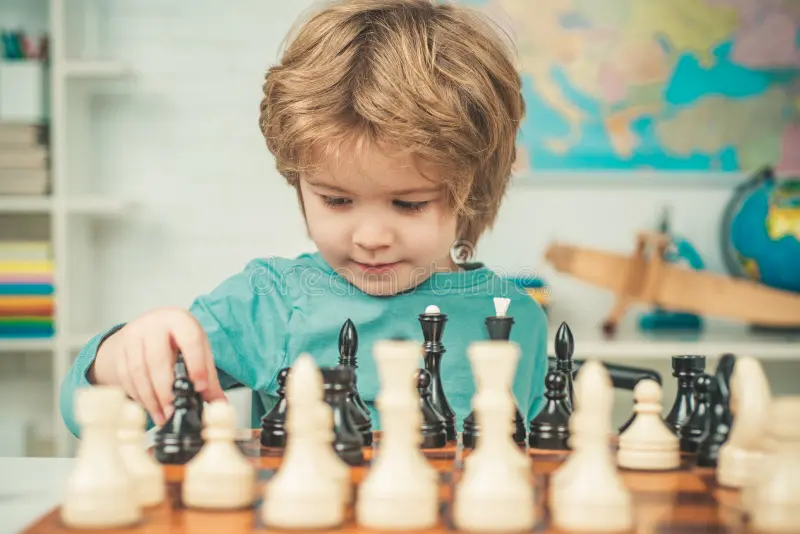
At the club level, many players believe that equal endgames should end in draws. Strong players see them very differently. For them, an equal endgame is not a neutral result but an opportunity. The material balance may be equal, but the game is still full of small imbalances that can be nurtured over time.
What separates strong players is not secret endgame knowledge alone, but their mindset. They assume the position is playable until proven otherwise. This belief drives them to keep asking questions, probing weaknesses, and slowly increasing pressure. Equal endgames reward patience, clarity, and discipline more than brilliance.
Computer evaluations often label endgames as equal, but practical chess is played by humans, not engines. Equality does not mean both sides have identical ease of play. One side may have a more active king, better piece coordination, or simpler plans.
Strong players understand that practical equality still contains directional advantages. They look for positions where their moves are easier to find than the opponent’s. This difference in difficulty is often enough to decide the game over many moves, even without any immediate tactical threats.
In equal endgames, the king becomes a fighting piece. Strong players activate their king early and decisively. They do not wait for clarity; they create it by centralizing the king and restricting the opponent’s options.
Club players often hesitate, fearing imaginary dangers. Strong players calculate accurately and push the king forward when it is safe. Over time, the more active king dominates space, supports pawn advances, and forces the opponent into passive defense. This gradual improvement often leads to zugzwang situations or forced concessions.
One of the most hidden techniques in equal endgames is piece improvement. Strong players constantly evaluate which piece is slightly worse and focus on upgrading it. A rook on an open file, a knight on an outpost, or a bishop with a clear diagonal can quietly tilt the balance.
These improvements rarely look dramatic. There is no sudden breakthrough. Instead, the opponent slowly loses flexibility. Each small improvement reduces defensive resources, making future mistakes more likely. Strong players trust this process and resist the urge to force action prematurely.
A single weakness is often defensible. Strong players know this and aim to create a second problem. In equal endgames, this usually involves fixing pawns on weak squares, provoking pawn advances, or forcing the opponent’s pieces into passive roles.
The key is patience. Strong players apply pressure without committing. They maneuver, repeat positions if needed, and wait for the right moment. Eventually, the opponent must choose which weakness to defend, and that choice often leads to irreversible damage.
Waiting moves are a powerful and underestimated tool. In equal endgames, strong players often improve their position while changing nothing concrete. These moves maintain tension and force the opponent to reveal intentions.
This technique is closely tied to zugzwang. By preserving flexibility, strong players increase the chance that the opponent will run out of useful moves. Club players frequently miss these opportunities by rushing pawn moves or exchanges that release tension and simplify the position unnecessarily.
Equal endgames are mentally exhausting. Strong players understand this and use it to their advantage. They play solidly, avoid risk, and keep the position alive. The opponent, expecting a draw, gradually becomes impatient or careless.
This psychological pressure is intentional. Strong players trust that consistency and calm decision-making will eventually outperform nervous defense. Many endgames are not won by force but by inducing a small mistake after hours of resistance.
While patience is critical, strong players also know when the position demands action. They carefully choose moments to push pawns, trade pieces, or change the structure. These decisions are based on deep understanding rather than hope.
Club players often change the position too early or too late. Strong players wait until the resulting position clearly favors them, even if only slightly. This timing is one of the most difficult but important endgame skills to develop.
Strong players respect technique, but they are not paralyzed by it. They know theoretical positions, yet they focus more on practical outcomes. If a technically drawn position offers chances against a human opponent, they will play on confidently.
This balance between knowledge and practicality allows them to extract wins where others settle for draws. They are not trying to prove the position is winning. They are trying to make the opponent uncomfortable.
Most club players view equal endgames as tests of memorization or luck. As a result, they either push randomly or offer draws too quickly. They miss the opportunity to practice one of the most valuable skills in chess: converting nothing into something.
Strong players embrace these positions. They know that learning to win equal endgames dramatically improves overall strength. It sharpens patience, calculation, and psychological resilience.
The hidden techniques of converting equal endgames are not hidden at all. They are simply difficult to execute consistently. They require discipline, emotional control, and trust in slow progress.
Strong chess players win equal endgames not because they see magic moves, but because they believe improvement is always possible. They respect the position, respect the opponent, and stay focused until the very last move. That mindset, more than any single technique, is what turns equality into victory.
 Previous ArticleThe Most Common Chess Mistakes Club Players Make in Winning Positions Next ArticleThe 3-Step Formula to Chess Mastery: Openings, Middle Games, and Endgames
chessbrainz
Mar 09,2026
 0
0
 81
81
chessbrainz
Mar 09,2026
0
84
chessbrainz
Mar 09,2026
0
88

chessbrainz
Mar 06,2026
0
153
081
084
088
0153
081
088
0153 00
00
.png)