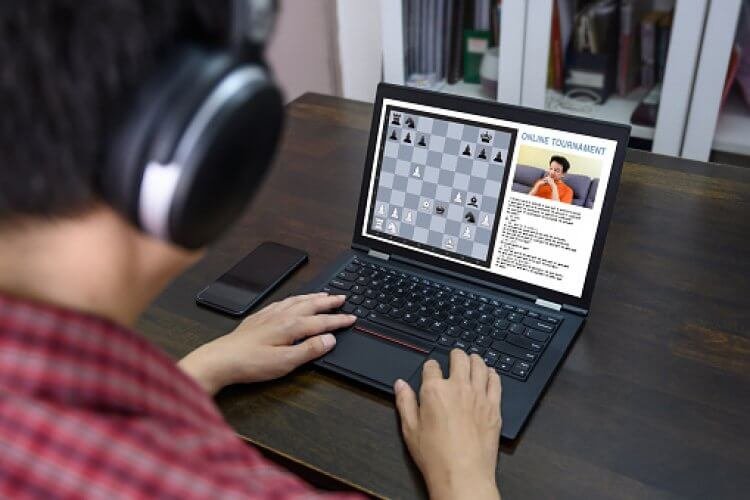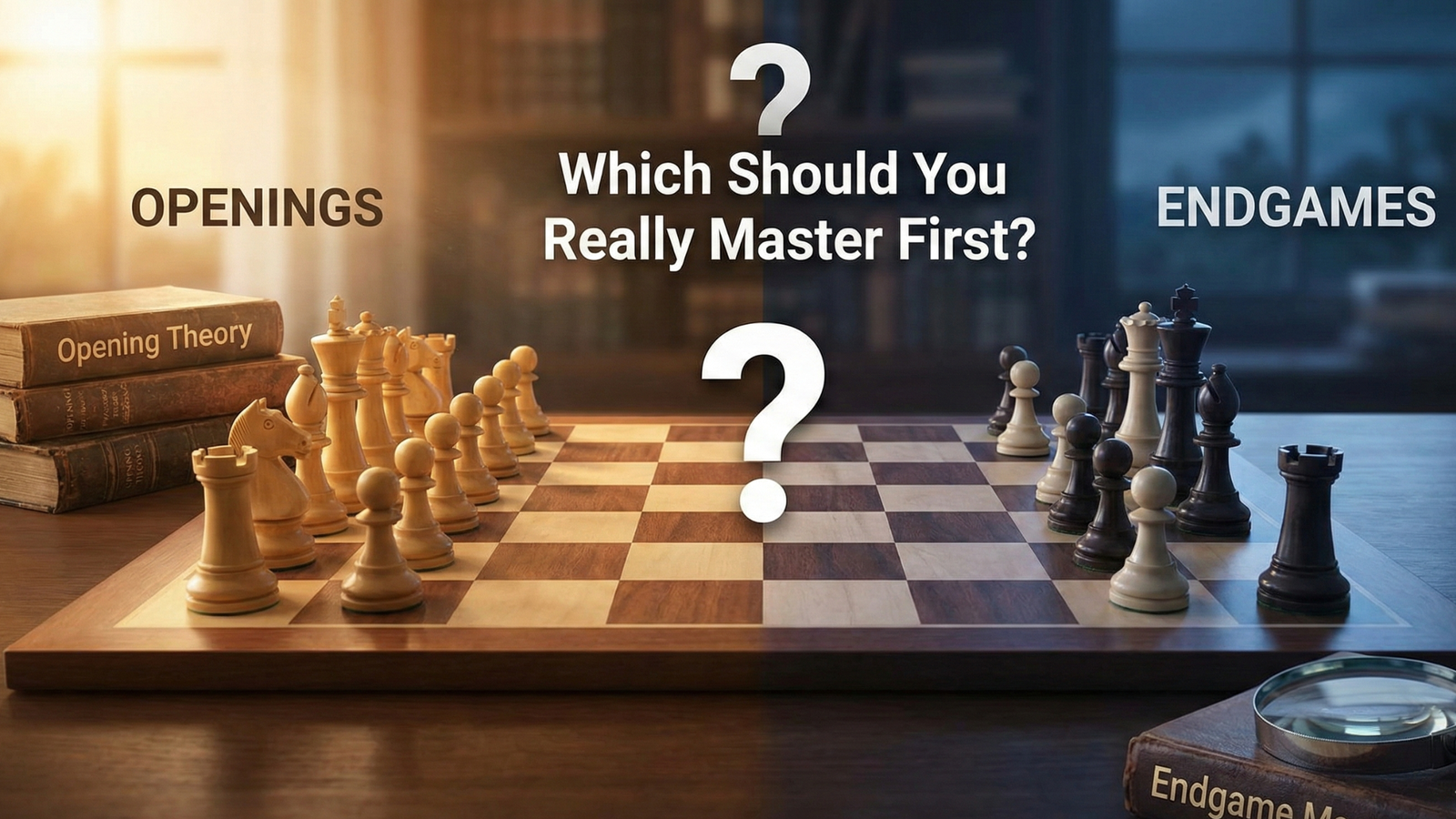
Almost every chess player, at some point, asks the same question: should I spend more time learning openings, or should I focus on endgames? This question seems simple, but the answer determines how fast or how slowly a player improves. Many players put in hours of effort, yet remain stuck at the same level for years. The reason is rarely a lack of practice. More often, it is the result of learning chess in the wrong order.
Openings are attractive because they offer quick gratification. Players enjoy learning sharp lines, traps, and quick checkmates. Online platforms, short videos, and courses heavily promote opening theory, making it appear that memorizing moves is the fastest path to success. When a player wins a game quickly due to an opening trick, it reinforces this belief. Unfortunately, this progress is often temporary and misleading.
The true purpose of an opening is simple: to reach a playable middlegame without making early mistakes. Openings help players develop their pieces, keep the king safe, and establish basic control of the center. They create a stable starting position, nothing more. Openings are not meant to win the game outright, especially at beginner and intermediate levels. Treating openings as a weapon rather than a foundation often leads to problems later in the game.
When players focus too heavily on openings too early, several issues arise. They panic when an opponent plays an unfamiliar move, forget theory after one deviation, and struggle to find plans once the opening phase ends. Even strong opening positions are frequently wasted because the player does not understand how to continue. This creates confidence in memorization but weakness in real decision-making.
For players below the advanced level, most games are not decided in the opening. They are decided by tactical mistakes, poor piece coordination, missed endgame ideas, and an inability to convert advantages. A player can play the opening perfectly and still lose badly if they do not understand what to do afterward. Chess is not won in the first ten moves; it is won by consistent accuracy across all phases.
Endgames strip chess down to its essentials. With fewer pieces on the board, there are no distractions and no shortcuts. Every move matters. Players must calculate accurately, plan ahead, and understand the value of pawns, squares, and king activity. This process builds deep understanding rather than surface-level memorization. Endgames teach players how chess actually works.
Through endgame study, players learn how to activate the king, convert extra material into wins, defend worse positions, understand pawn structures, and calculate with precision. These skills are universal. They apply not only to endgames but also to middlegames and even opening choices. A player who understands endgames naturally becomes a stronger all-around player.
Strong players are comfortable exchanging pieces because they trust their endgame technique. They simplify confidently when ahead and defend calmly when worse. Players without endgame knowledge often avoid trades, keep unnecessary tension, and eventually make mistakes under pressure. Endgame understanding creates calmness and clarity throughout the entire game.
Endgame knowledge directly improves middlegame play. When a player understands endgames, they make better decisions about which pieces to trade, which pawn structures to aim for, and which long-term plans to follow. Instead of playing move by move, they think about where the position is heading. This makes their middlegame play purposeful rather than reactive.
One of the most overlooked truths in chess training is that endgame study actually improves opening play. Players who understand endgames choose openings that lead to positions they are comfortable handling. They stop copying theory blindly and start selecting openings based on structure and plans. This creates consistency and confidence from the very first moves.
Traditional chess training has always emphasized endgames early, and for good reason. Endgames develop discipline, calculation, patience, and strategic thinking. These qualities form the foundation of strong chess understanding and remain valuable at every level, from beginner to master. Coaches know that a solid foundation produces long-term results.
Children who start with endgames develop stronger logical thinking, calculate more accurately, and panic less under pressure. They understand the consequences of their moves and learn how to convert winning positions calmly. Instead of relying on tricks, they rely on understanding. This is why many young prodigies are trained with simplified positions early in their development.
Openings should be introduced gradually, once a basic understanding of endgames and middlegames is in place. At that stage, players benefit far more from learning ideas, plans, and typical structures rather than memorizing long move sequences. This makes opening study effective instead of overwhelming.
For most players, a small amount of opening knowledge is sufficient. Knowing basic opening principles, playing one or two openings as White, using one or two solid defenses as Black, and understanding typical plans is enough for steady improvement. Anything beyond this should come later, once the foundation is strong.
The most effective learning order begins with basic endgames, followed by middlegame ideas and tactics, then simple openings, and finally deeper opening theory only when necessary. This structured approach prevents confusion, builds confidence, and leads to faster, more sustainable improvement.
If you want to improve faster and more consistently, start with endgames. Openings matter, but they should be built on understanding, not memorization. Chess rewards clarity, patience, and long-term thinking. When the foundation is right, everything else becomes easier.
If you want structured guidance on learning chess in the correct order, you can book a free demo chess class and see how focused training builds real strength step by step.
— Kunal Gupta
 Previous ArticleClassical Games vs Practical Play: Which Improves Your Chess Faster? Next ArticleChess vs Screen Time: Giving Kids a Healthy Brain Workout
chessbrainz
Mar 09,2026
 0
0
 115
115
chessbrainz
Mar 09,2026
0
125
chessbrainz
Mar 09,2026
0
148

chessbrainz
Mar 06,2026
0
263
0115
0125
0148
0263
0115
0125
0148
0263
.png)