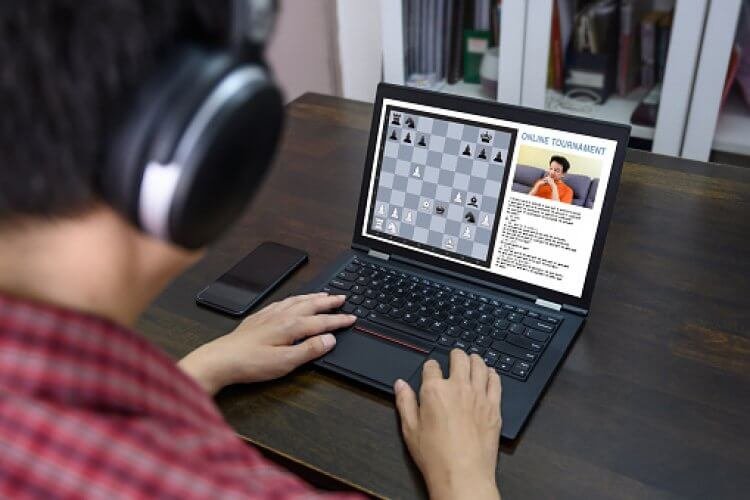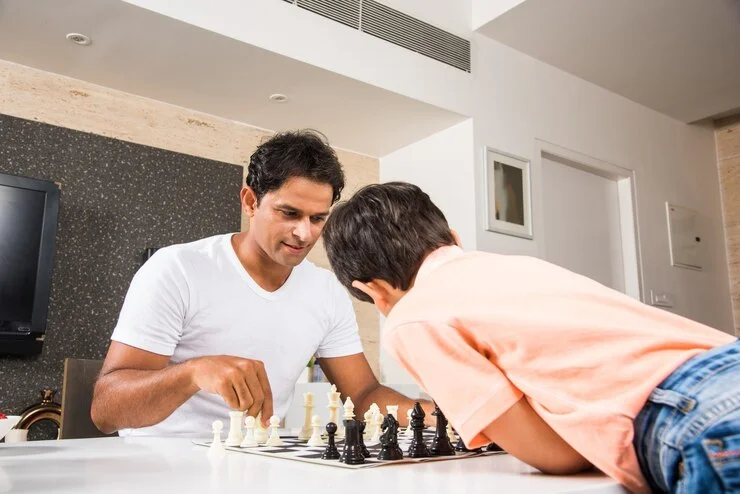
We see a consistent pattern around the world: many of the highest-performing students academically strong, disciplined, and quick learners also happen to learn chess.
This is not a coincidence. The cognitive demands of chess build the same mental muscles students rely on in school: focus, memory, problem-solving, patience, and structured thinking.
At Chessbrainz, we observe this connection every day. Children who practice chess regularly learn to think more clearly, handle pressure better, and understand complex ideas faster.
Below is a deeper look at why chess quietly becomes a competitive advantage for students.

School toppers usually share one major strength: the ability to concentrate for long periods.
Chess trains exactly that.
During a game, a child must:
block out distractions
analyze multiple possibilities
think several steps ahead
This constant mental discipline strengthens focus in ways regular classroom work rarely does.
Teachers often report that children who play chess show:
better attention in class
less fidgeting
improved ability to complete long tasks
In a world full of screens and distractions, the ability to stay mentally present is a major academic edge.

Top students usually have strong working memory, the ability to hold information while using it.
Chess naturally strengthens both:
Short-term memory (remembering moves, patterns, and tactics)
Long-term memory (opening ideas, endgame rules, strategic principles)
As children play more, their brains memorize recurring patterns automatically.
This makes recalling academic information formulas, grammar rules, historical facts much easier.
Many parents notice that after a few months of chess training, their child’s ability to absorb school content improves significantly.

Every position in chess is a new problem.
There is no shortcut, no guesswork only logic.
Students learn to:
break down complex problems
evaluate options
calculate consequences
choose the best solution under time pressure
These are the same skills required in mathematics, science reasoning, coding, and analytical writing.
This is one reason why chess-playing students often excel in STEM subjects.

Top students don’t just work hard they work smart.
Chess develops the habit of planning with purpose.
Children learn questions like:
What is my goal?
What steps will take me there?
What risks should I avoid?
If things go wrong, what is Plan B?
This forward-thinking mindset transfers directly into studying:
better planning for exams
more structured notes
smart time management
prioritizing tasks instead of reacting randomly
Chess teaches students to think in frameworks, not chaos.

Strong academic performers know how to stay calm under pressure from exams, deadlines, and tough subjects.
Chess helps children grow emotionally because it teaches them:
how to lose gracefully
how to bounce back after failure
how to stay patient
how to make decisions even when stressed
This emotional maturity becomes a huge advantage during competitive exams and academic challenges.

Students who learn chess develop a quiet, stable form of confidence.
Winning isn’t required. Improvement itself builds self-belief:
solving puzzles a bit faster
understanding new strategies
beating a stronger opponent
avoiding mistakes they used to make
Each small step convinces them:
“I can learn anything if I put in effort.”
This mindset alone differentiates average students from exceptional ones.

Schools often reward correct answers.
Chess rewards correct thinking.
Children learn that:
mistakes are lessons
thinking for themselves is essential
relying on someone else never works in chess
creativity is allowed and rewarded
This independence helps them excel in research projects, debates, writing assignments, and competitive exams.
Chess does not teach kids what to think; it teaches them how to think.

This is perhaps the most interesting part:
Top students often gravitate toward chess because it challenges them.
Chess attracts young minds who:
enjoy logic
love solving puzzles
want to push their limits
like intellectual competition
prefer meaningful challenges over passive activities
In this sense, chess becomes both a training ground and a natural home for academically ambitious children.

Chess is not just a game. It’s a mental training system that builds:
focus
memory
logic
emotional maturity
problem-solving
discipline
structured thinking
These are exactly the qualities that define top-performing students.
It’s no surprise that so many academically strong children learn chess the game strengthens their minds in ways few other activities can match.
If you want your child to develop the same level of mental sharpness, clarity, and confidence, introducing chess early is one of the most effective decisions you can make.
 Previous ArticleHow Online Chess Boosts Confidence in Shy and Introverted Kids Next ArticleClassical Games vs Practical Play: Which Improves Your Chess Faster?
chessbrainz
Mar 09,2026
 0
0
 115
115

chessbrainz
Mar 09,2026
0
125
chessbrainz
Mar 09,2026
0
148

chessbrainz
Mar 06,2026
0
263
0115
0125
0148
0263
0115
0125
0148
0263
.png)